- “Halloween Decor Doesn’t Have to Be Orange and Black—This 2024 Trend Proves It,” The Spruce
- “Here’s How to Grow and Care for a Thanksgiving Cactus Indoors,” Good Housekeeping
- “Don’t Overlook Facebook Marketplace for Top-Tier Decor Deals. Here’s What to Know.” The Wall Street Journal
- “How To Clean Electric Stove Burners To Avoid Burnt On Stains,” Southern Living
- “How to Style Throw Pillows, According to Design Pros,” Better Homes & Gardens
- “The ‘Whimsigoth’ Aesthetic Isn’t Just for Witches,” Architectural Digest
- I found this article through AD’s Instagram (posted Sept. 29, 2024; see below). I scrolled until I found a post that looked seasonal, and the word “whimsigoth” jumped out at me.
Every article uses subheads to separate content. Multiple are used in a how-to format, like “How to Decorate for Pinkoween” (The Spruce), “How To Clean Electric Stove Burners” (Southern Living) and “How to Arrange Pillows on a Bed” (BH&G). Others are pieces of advice, like AD’s “Dress the room with jewel tones and metallics” or WSJ’s “Entice the seller.” The subheads, combined with other elements like bulleted or numbered lists, easily break up the content for the reader, who could walk away with advice even if they read just the bolded words.
Visual elements also break up the stories, which is especially helpful in AD’s article about the whimsigoth aesthetic, which isn’t a common design style. One article that could use more images is the BH&G article about pillows. It assumes the reader knows a Dutch Euro from a bolster pillow, and I think it would have been helpful to have a specific photo of the setups the designers are describing.
The sources in these pieces are mostly designers or other experts. The least-expert sources are in the WSJ piece, which references a designer blogger (who has a day job) and a UX/UI designer. There is also a source named in the lead photo — a substitute teacher — that isn’t in the story, which I found interesting. I would have liked to read more about this person.
One thing that I noticed in these pieces is the use of verbs other than “said”: “notes,” “recommends,” “offers,” “elaborates” (The Spruce); “adds,” “insists,” “explains” (AD); and a lot of “says.” These creative verbs would not be found in news reporting. The WSJ article predictably sticks to the traditional “said.” I think mixing the verb up when you can makes the content more approachable and interesting, but in some instances, it feels a bit forced and I think “said” or “says” would be better.
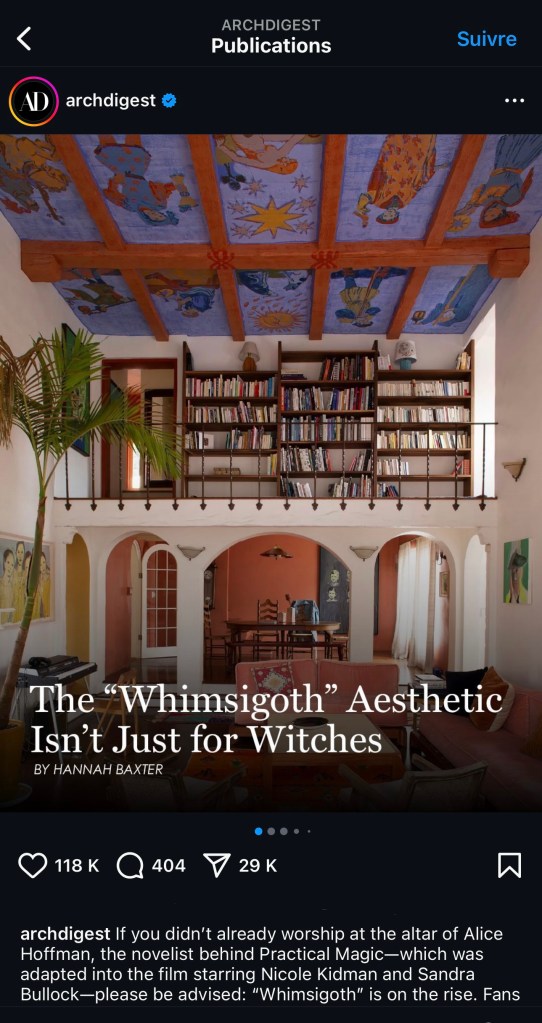
From Architectural Digest’s Instagram, Sept. 29, 2024
 Jacqueline GaNun
Leave a comment