Lille is perfect for a slower, relaxing weekend away from the bustle of bigger cities, or as a stop on the way to Brussels
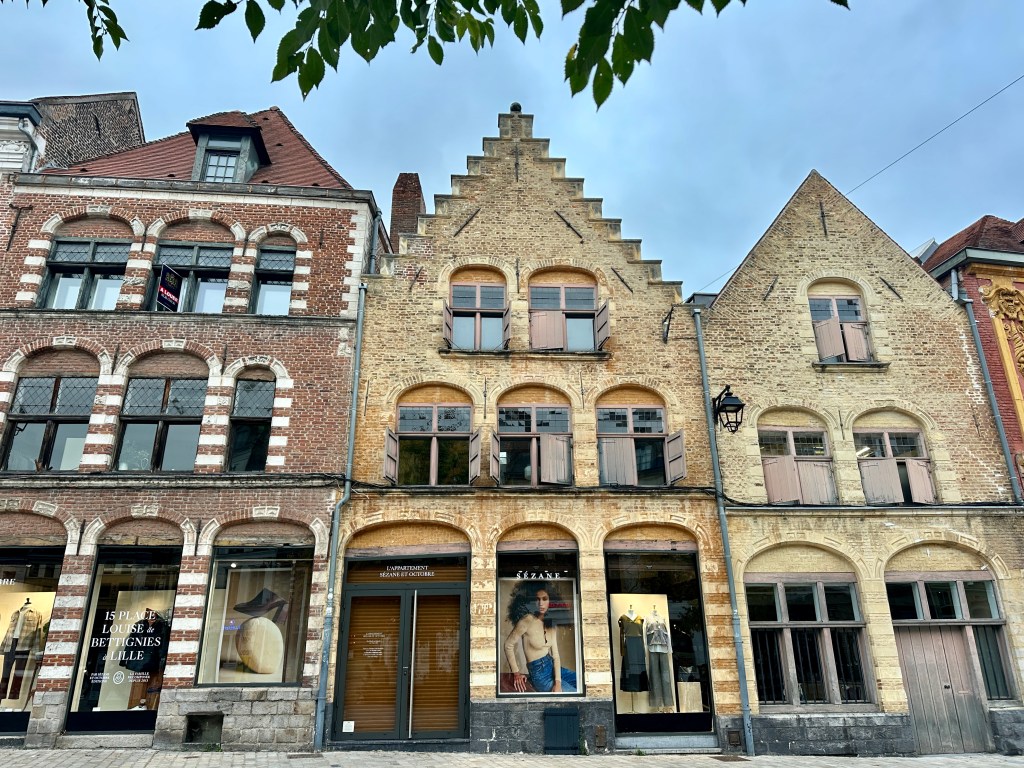
Lille is a mélange of French and Flemish culture and architecture.
Text and photos by Jacqueline GaNun
Oct. 28, 2025
Read this post on Substack here.
LILLE, France — There are some travel destinations I’ve been dreaming of for years, but I will admit my trip to Lille was motivated more by “why not?” than “why.” This charming city in northern France is among the country’s largest and, crucially, only about an hourlong train ride away from Paris, where I currently live.
Lille is also a mere 10 miles away from Belgium, making it a crossroads of French and Flemish architecture, cuisine, and culture. Think the iconic Haussmannian buildings of Paris meets red brick and ornate detailing. On menus, you’ll find northern spins on classic French dishes, such as escargot with Maroilles cheese, alongside uniquely Flemish plates, such as a hearty beef stew known as carbonade flamande.
I’ve seen Lille called an underrated gem of France, and I think it’s perfect for a slower, relaxing weekend away from the bustle of Paris, or as a stop on the way to Brussels.
How to get there and get around
From Paris, you can take a bus (around three hours) or a train (around an hour and 15 minutes) to Lille. The average price for a one-way train hovers around €30 ($35),1 and buses are cheaper at around €10–20 ($12–23) one-way, according to Omio, although prices always vary. There are also trains and buses from London and Brussels.
When I arrived in Lille, I got a one-day public transport pass for €5.50 ($6.40), but I wouldn’t buy it again. I was able to get everywhere by walking, usually faster than it would have taken to wait on the bus or metro. (I also think walking is the best way to see a new city!) If you plan to use public transport more than three times, the day pass is worth it as a single-use ticket is €1.80 ($2.10).
Where to stay
I stayed for one night at Central Lille hostel in a 6-bed women-only dorm. Central was, as the name suggests, quite conveniently located, and I had a great stay. It wasn’t the most social hostel I’ve been in — the lobby area was being used mostly for coworking — but the building was beautiful.
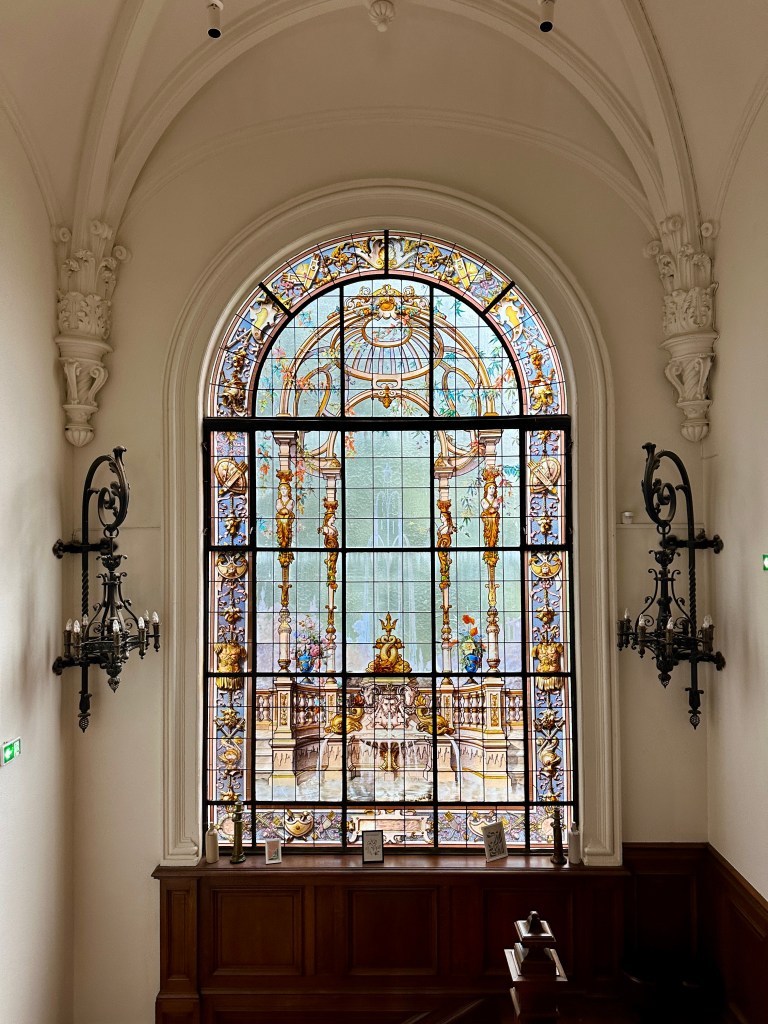
This is probably the most stunning window I’ll ever see in a hostel.
The room was clean, the beds had privacy curtains, I had a large locker to hold my stuff (tip: always bring your own travel lock), the person working the front desk was efficient and kind, and the check-out time was a generous 11 a.m.
I would recommend Central, but there are about five other options for hostels on Hostelworld. There are also more than 100 hotels listed on Hotels.com, with quite a few in the city center.
What to do
Wander through Vieux-Lille’s narrow cobblestone streets

Vieux-Lille’s winding, narrow streets are perfect for getting lost.

Heading toward la Place du Théâtre, with the bell tower of the Chamber of Commerce visible.
Like many small towns, Lille is best experienced through strolling (or “flâner” in French). Amble down the narrow lanes of the oldest part of the city to admire 17th-century architecture in an interesting mix of French and Flemish. Parts of Vieux-Lille, with its moody color palette and dark cobblestones, reminded me of Edinburgh or Prague.

The entrance to la Rue de la Monnaie in Vieux-Lille.
I passed plenty of cute shops (though I resisted going in for my wallet’s sake), and there are more than a few options for a boulangerie or pâtisserie to pop into.
For those looking to splurge a little, Méert offers all sorts of sweets, including dark chocolate (€9.90, $11.50, for a 72%-cacao bar), pistachio-raspberry pâte à choux (€6.90, $8), and caramels (€14, $16.30, for a box of 12). For a local treat, try the Belgian-slash-northern French delicacy gaufre à la vanille, a thin waffle with vanilla (€20.50, $23.90, for a box of 6).
For a more budget-friendly pick, head to Boulangerie Mathieu for a chocolate éclair (€3.40, $4) and croissant (€1.20, $1.40). To make a lunch of it, try a sandwich chaud jambon cru raclette (€5.60, $6.50) or quiche lorraine (€4.60, $5.30).
Browse vintage books in la Vieille Bourse
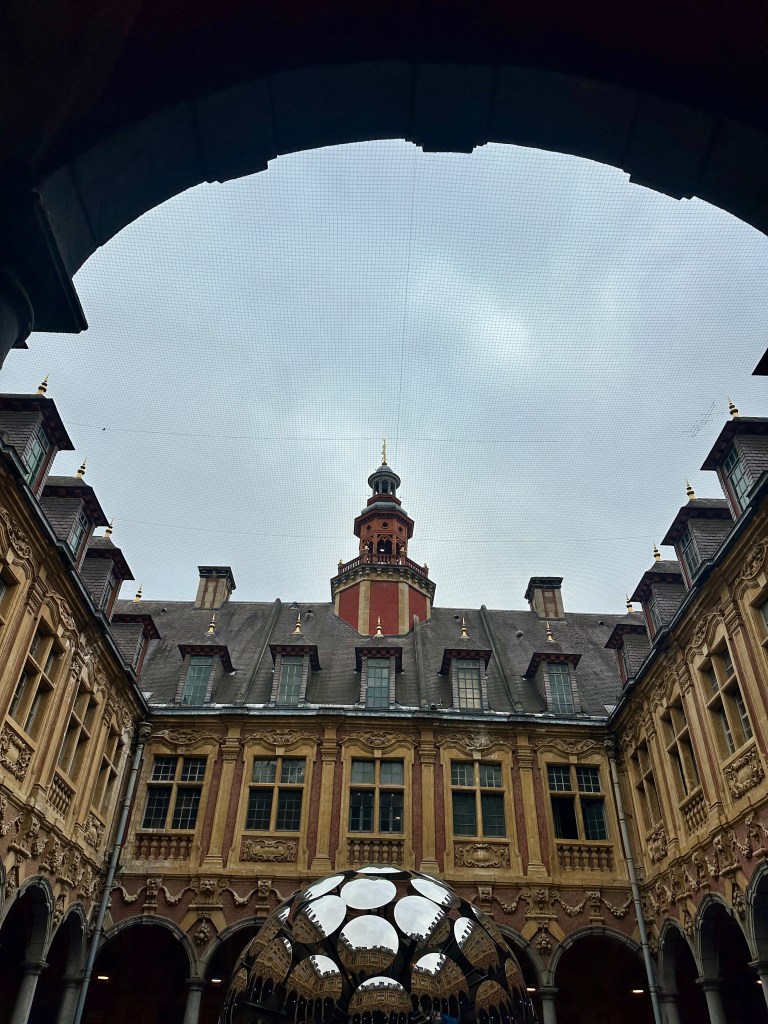
The courtyard of la Vieille Bourse.
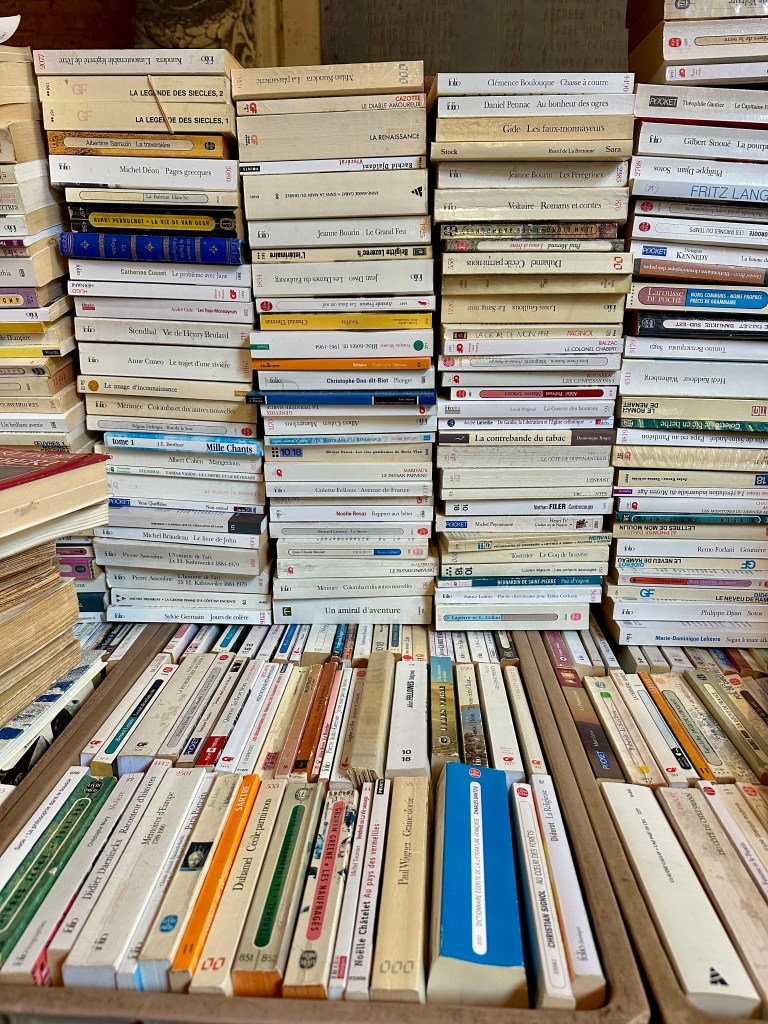
Vintage books for sale.

Looking out from la Vieille Bourse onto la Place du Théâtre.
This lavish building encircling a courtyard was built in the 1650s with embellished arches and a bold brick-red color palette. It was originally Lille’s stock exchange, but after the new Chamber of Commerce opened, la Vieille Bourse (which literally means “old stock market”) became a historic monument. It now hosts used book markets from 1–7 p.m. every day except Monday. On hot summer nights from July to September, the book stalls are replaced by crowds dancing under yellow lamps during weekly Sunday tango nights.
People-watch at la Grand’Place and la Place du Théâtre
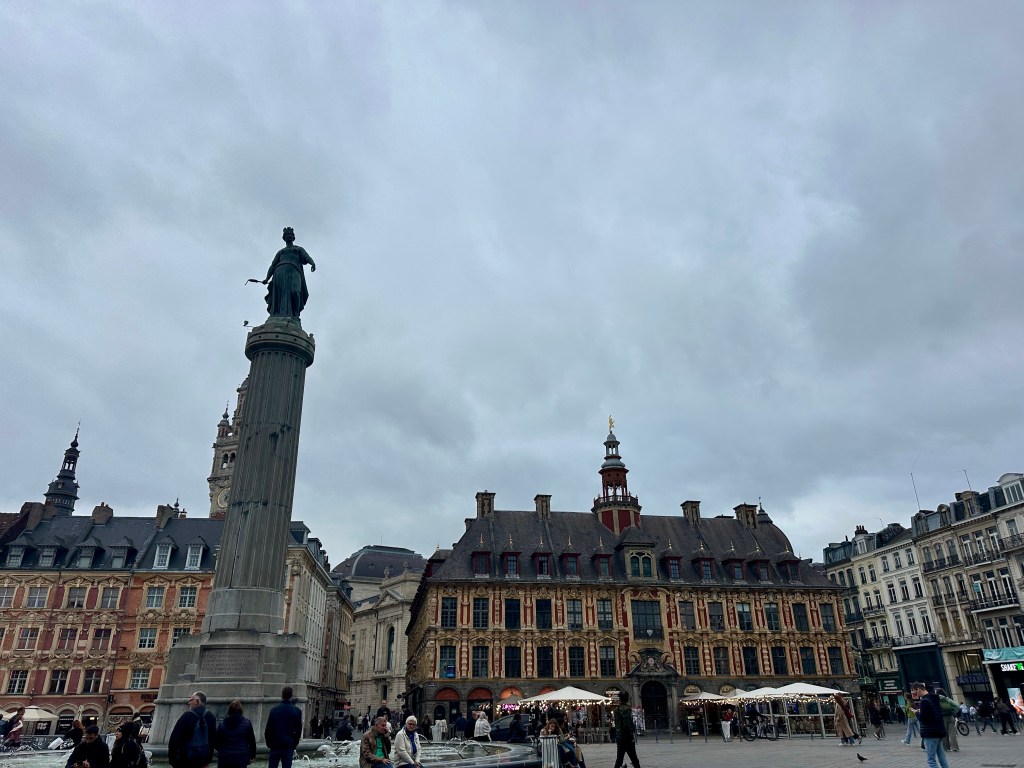
La Grand’Place is a prime people-watching spot.
Two open-air squares within a 5-minute walk from each other are the heart of Lille’s old town. La Colonne de la Déesse, installed in 1845, watches over la Grand’Place. The statue commemorates Lille’s resistance to a 1792 Austrian invasion, and the fountain that surrounds it is a prime spot to sit and watch tourists and locals walk by. You might also grab a drink at a nearby café with terrace seating, or stop in Furet du Nord, which is the largest bookstore in northern France, according to Lille’s tourism office.
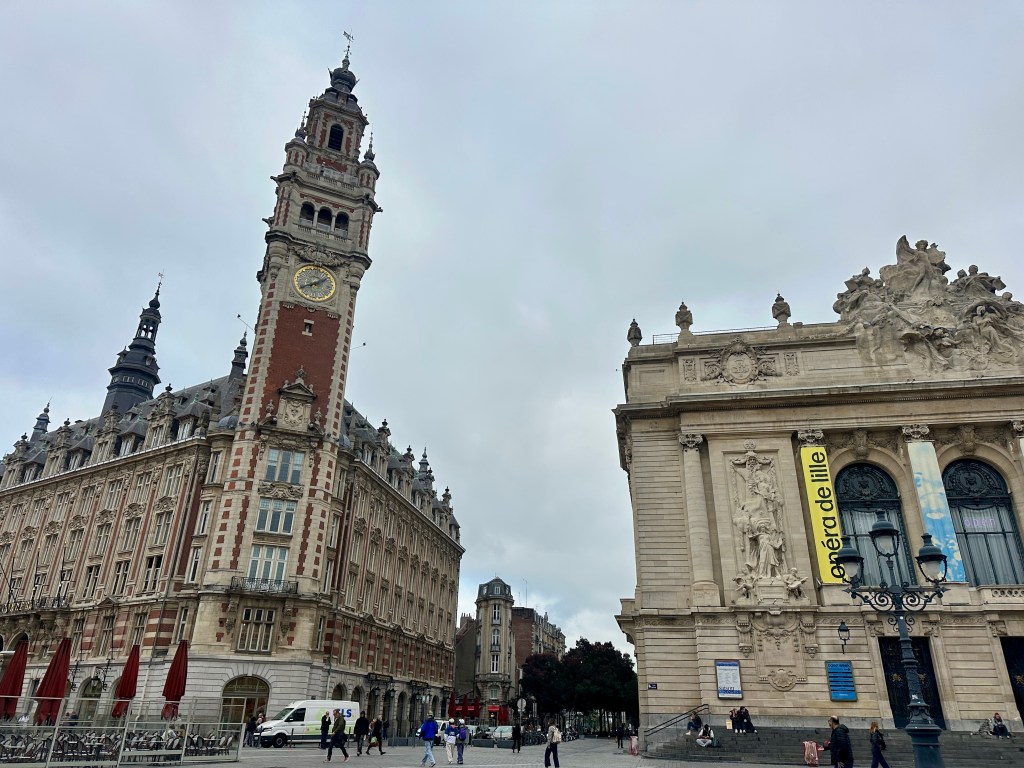
Lille’s Chamber of Commerce and Opéra next to each other in la Place du Théâtre.
La Place du Théâtre is home to the Lille Opéra and the Chamber of Commerce with its impressive bell tower. The belfry was inspired by 17th- and 18th-century Flemish architecture. The Opéra hosts dances and concerts in addition to operas.
Sample Belgian beers
Belgium is known for its beers, from dark ales to saisons to tripels. Because Lille is so close to the border, you can find plenty of Belgian beer on draft. I mostly kept to blondes, which are easy-drinking and not too hoppy. I recommend La Capsule, a small, inviting bar with more than 20 craft beers on tap and many more bottled.
Eat dinner at an estaminet
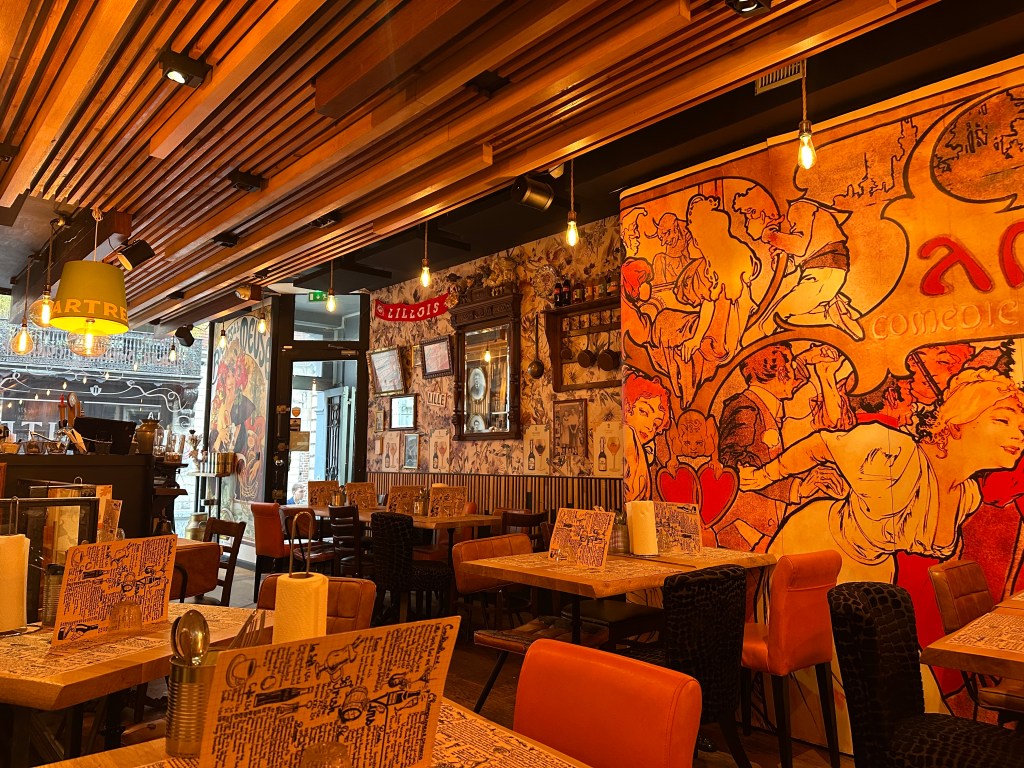
Estaminet Ch’tite Brigitte was (expectedly) empty at 4:30 p.m.

I loved the handwritten menu.
In the 1800s, locals would gather at estaminets to drink beer, smoke, and play cards — in other words, hang out. Today the term has evolved to mean restaurants that serve local cuisine, often outfitted with rustic tavern décor.
There are plenty of estaminets in Lille from which to choose, but unfortunately none I could find were necessarily budget-friendly. I went to Estaminet Ch’tite2 Brigitte at an admittedly odd time (around 4:30 p.m., too late for lunch and too early for dinner) and had the entire place to myself, which lent the entire experience a bizarre, liminal vibe (although the workers were very friendly!).
I got the welsh au sablé de Wissant, a traditional dish of melted cheese and ham with French fries on the side, for €20 ($23.25). Not the most nutritious or wallet-friendly meal, but I couldn’t pass up the novelty. It was good because of course it was — again, melted cheese and French fries — but next time, I would try the hearty beef stew called carbonade flamande or Belgian shrimp croquettes with béchamel sauce (and I would go at dinnertime with a reservation).
Marvel at la Cathédrale Notre-Dame de la Treille and l’Église Saint-Maurice
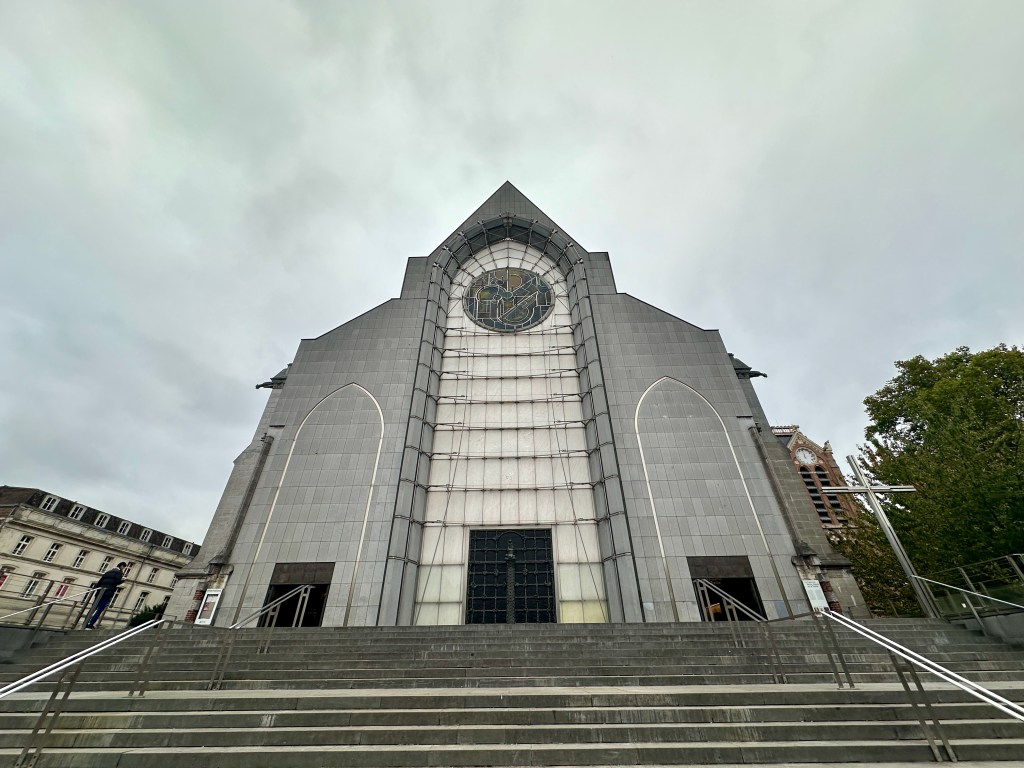
The modern façade of la Cathédrale Notre-Dame de la Treille was conceptualized in the 1980s.

Inside la Cathédrale Notre-Dame de la Treille.

Intricate stained-glass windows inside la Cathédrale Notre-Dame de la Treille.
While la Cathédrale Notre-Dame de la Treille shares common gothic features with many others in Europe, its modern exterior and mosaic cemented it as one of the most unique churches I’ve seen in France. The modern, almost brutalist façade was conceptualized in the 1980s and contrasts with an interior of classic soaring ceilings, intricate stained-glass windows, and stunningly detailed tilework. The cathedral took 145 years to complete.
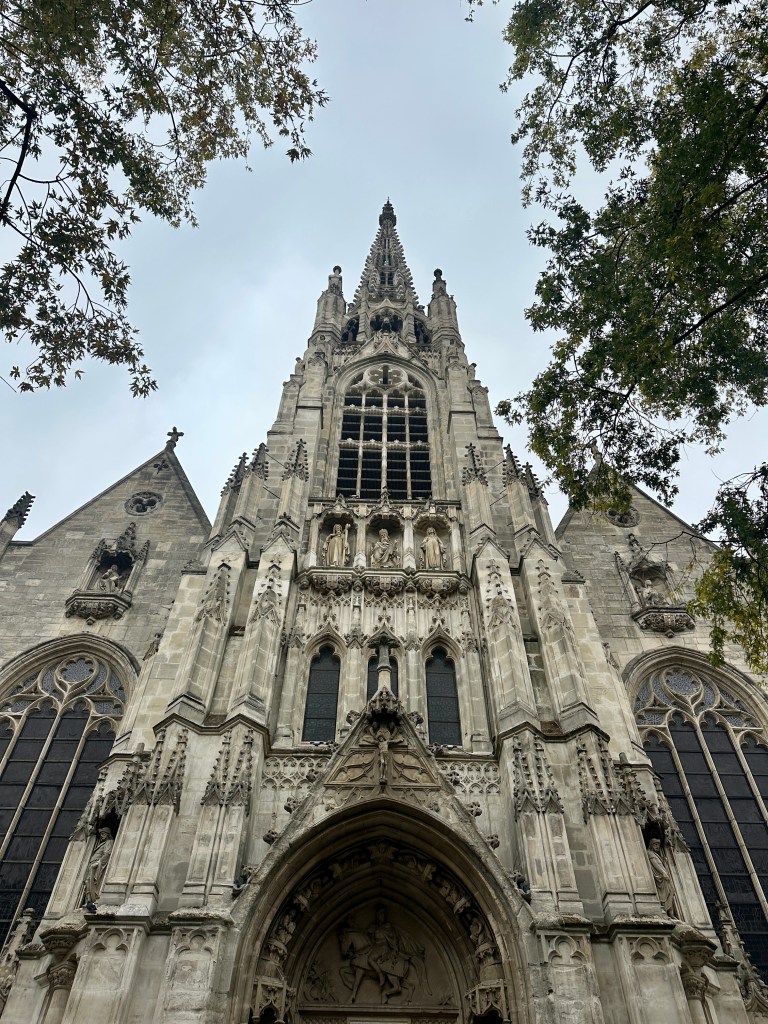
L’Église Saint-Maurice is a classic Gothic church.
I stumbled upon l’Église Saint-Maurice by accident after picking up a pain au chocolat for breakfast. This church was built in Gothic style between the 14th and 19th centuries.
Connect with nature and learn military history at la Citadelle

Access to the inside of la Citadelle is off-limits, but the park surrounding it is open.
The inside of this star-shaped fort — built in the late 1660s and nicknamed the “Queen of Citadels” — is off-limits to visitors as it’s still actively used by the military, but visitors are free to roam around the perimeter. The star makes for a fun walking path (especially if you map it with a watch or phone) and there are fields and a tree-lined canal close by.
What I wish I did in Lille
La Braderie
I wasn’t able to attend La Braderie because I was still stateside on the first weekend of September, when this massive flea market — the largest in Europe, according to Lille’s tourism office — takes over Lille. Every year, vendor stalls occupy miles of sidewalk, hosting around 2.5 million visitors.
Le Palais des Beaux Arts

At least I got to see the outside of le Palais des Beaux Arts.
Learn from my mistakes and always check the opening hours. Le Palais des Beaux Arts has France’s second-largest art collection after the Louvre, according to the country’s tourism office, and I was excited to look around only to find it was closed on Tuesdays. I’m still kicking myself for not checking the hours. Tickets are €7 ($8.15).
La Piscine de Roubaix
A museum in a beautiful, historic swimming pool — you’d be hard-pressed to find something more uniquely catered to my interests. Unfortunately, I didn’t plan around going to La Piscine, which is about a 45-minute journey from Vieux-Lille by public transport. By the time I was thinking about going, I got worried about missing my train back to Paris. Tickets are €11 ($12.80) during exhibitions and €9 ($10.50) outside of exhibition periods.
Perhaps I’ll go back to Lille at some point to see these museums — maybe as a stop on my way to Belgium, where I’d love to visit Brussels,3 Ghent, and, Bruges.
1: All currency conversions are approximate and as of Oct. 27, 2025.
2: Ch’ti is an unofficial name for the dialect of northern France, also used to describe its people.
3: I already wanted to visit Brussels, but after learning it’s the home of a bar where you can try 2,000 beers from around the world, I simply must go.
 Jacqueline GaNun
Leave a comment